The Human Side of Data: Building a Legacy of Academic Technology and Research Support at Carleton College
Bridging the gap between technical infrastructure and liberal arts research.
Carleton College is a small private liberal arts college in Northfield, Minnesota known for its rigorous academic environment and collaborative spirit. With approximately 2100 students, Carleton has a deep commitment to undergraduate research, and has long navigated the unique challenge of providing high-level technical support within a small-scale setting. CaRCC spoke with Paula Lackie, Academic Technologist for Data at Carleton College, to learn how a 1991 “faculty revolution” paved the way for a human-centered approach to research computing and data that continues to empower students and faculty today.
The following Q&A has been edited for brevity and clarity.
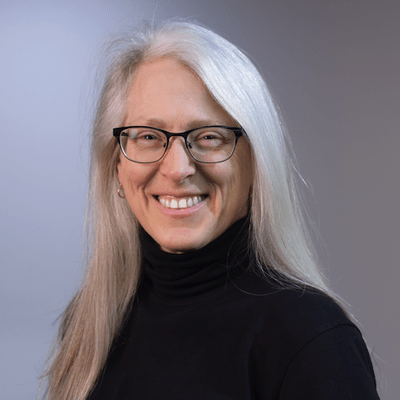
Paula Lackie is a long-time social science data advocate and social science and humanities technologist.
How did research computing and data (RCD) support originally get started at Carleton?
It actually started with a revolution. Around 1991, the faculty revolted because technology and computing support needs were overwhelming the tiny IT staff they had at the time. To survive, the staff’s response back then was a “lock it down” approach to sequester their resources. This left everyone else, including our language departments and researchers entirely on their own.
The faculty wrote a manifesto describing what they wanted from the institution, which effectively described what we now call “academic technology.” In response, the college hired Cathy Smith to turn that manifesto into actionable job titles. I was brought in as the social sciences person because the faculty wanted someone who specifically understood social science data. From the beginning, our philosophy was to talk with people, find out what they needed, and then try to make the technology match those needs. Of course, there have been a few transformations since 1993, but the foundational philosophy has remained much the same.
Where does your team sit organizationally, and how does that affect your work?
We are part of what became Information Technology Services (ITS). While we never merged with our library, we work closely with them. I’m currently part of a team of seven academic technologists. We have expertise in classroom technology, video, online education, AI, Universal Design for Learning (UDL), languages, and with specialized equipment interfaces. Carleton also has “embedded technologists” working for departments like Math, Statistics, and Computer Science who manage servers and a high-performance computing (HPC) cluster. This structure allows us to be specialists while still being part of the broader IT utility at our tiny institution.
You’ve mentioned that “data” can be a difficult term to define across disciplines. How do you approach that?
Data means everything and nothing at the same time. Every discipline has its own concept of what “data” are, and they often use the same terms to mean completely different things. My personal definition of “data” is any organized collection of anything. But there are some consistencies; because of my background with the Inter-University Consortium for Political and Social Research (ICPSR), a research data archive, I learned long ago to think in terms of the research data lifecycle, and also recognize the necessity of thorough metadata. Whether it’s qualitative interviews, image collections, lab data, or web-scraping, we try to bridge that vocabulary gap to help people protect their research data. <https://carletondatasquad.bitbucket.io>
One of your most distinctive initiatives is the “DataSquad.” How did that experiment begin?
The DataSquad addresses a core problem at small liberal arts colleges: we have limited capacity for dedicated data services, and students have few opportunities to gain practical, “real-world” experience with data and software development. I designed the program as a work-study position that treats students as professionals-in-training that also works to supply data services to the institution.
It’s built on a model of structured peer mentorship. Instead of me teaching every student every skill, the students train one another through real client projects. They tackle data problems of increasing complexity—starting with basic data cleaning and analysis and moving up to full-scale software development. If I can guide student teams through projects, as a group, we may scale our impact far beyond what I could do as a single staff member.
What are the core principles you teach the students in the DataSquad?
We focus heavily on FAIR data principles—ensuring that data is Findable, Accessible, Interoperable, and Reusable. We also emphasize open science practices. It’s not just about the technical skills; it’s about fostering a reproducible research/data-lifecycle mentality.
I spend a lot of my time working on clarity and precision in communication. A student might be a brilliant programmer, but if they can’t explain a technical solution to a non-tech-oriented colleague or professor, the project won’t succeed. This approach builds their professional confidence. They aren’t just student workers; they learn to be consultants.
Is this a model that other small colleges can replicate?
Absolutely. It’s highly adaptable, which we’ve seen through “DataSquad International.” Institutions like UCLA and other colleges have adopted aspects of the model using our openly shared materials. The goal is to create a sustainable, low-cost way to provide data support while simultaneously preparing the next generation of data and computer scientists for the workforce. We wrote a paper that describes the program’s implementation at Carleton College (Lackie, Pickens, and Coyier 2025) and examines how structured peer mentorship can simultaneously improve institutional data services and provide students with professional skills and confidence. Currently, a few of us are building out a new website on GitHub.
Is there a specific research success story that stands out to you?
This winter, a first year student on the DataSquad created Quail, a software package and language (using AI) to solve a challenge on our campus; the Career Center has a rich portfolio of student reflections, artifacts, and survey responses, each with the potential to influence what they focus on. In practice, however, they simply don’t have time to attend to it.
With AI support, he wrote an app that creates a way to probe these resources with AI. His app is better than the usual tools because it reports back about all of the decision points the AI constructs and shows its working logic. We first tested it on human-verified datasets and benchmarking resources. In the initial pass for the Career Center, Quail efficiently identified the themes they needed, transparently documenting how the data were cleaned and combined, and the source and logic behind its reported conclusions. We have a paper submitted to US-RSE26 and hope to get that published sometime next year. Of course, he will likely have created a few more iterations of the software by the time it’s published! It’s been very rewarding to see how he found a passion in this work while solving a need on our campus. It’s open source.
We’ve also had “antique” success stories. I once had a student bring me a magnetic tape from ICPSR back in the early 1990’s. Only a sysadmin and I had an idea of how to get the data off it. I had to drag some EPSDIC programming language out of the back of my brain to talk to the system—and also “put a HEX on it”, and we rescued the data. Other students have brought basic data; no headers, no delimiters; with an external codebook. Those moments are very satisfying.
What is your “elevator pitch” for the RCD program at Carleton?
We tell students that the best time to meet with us is before they think they are ready. We are here to help students think through choices before they commit to any specific path. Whether they are dealing with qualitative interviews, survey development, database design, or complex metadata management, we provide the human bridge that ensures their plan and the technology matches their research goals and guides around hidden pitfalls so they can focus on discovery!
References
Lackie, Paula, Elliot Pickens, and Dashiell Coyier. 2025. “The DataSquad Experiment: Lessons for Preparing Data and Computer Scientists for Work.” arXiv, November. https://doi.org/10.48550/arXiv.2511.19688.