

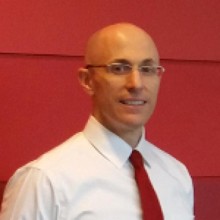
As the Campus Research Computing Consortium (CaRCC) celebrates its tenth anniversary, Stephanie Heidemann sat down with Galen Collier, director of researcher engagement at Princeton University, to talk about how the organization’s earliest days shaped his career, and why he still believes CaRCC’s greatest strength is the people behind it.
Galen Collier is the director of researcher engagement for research computing at Princeton University. He has been involved with the research computing facilitation community since 2005, which was nearly a decade before the onset of the ACI-REF program, CaRCC’s predecessor. Galen previously held research computing roles at Clemson University, North Carolina State University, and Rutgers University.
How did you first get involved with CaRCC?
I’d say since day one. I was involved in the ACI-REF program (U.S. National Science Foundation–sponsored Award No. 1341935), which predates CaRCC; it was an early proof of concept. What that proof showed us was that a distributed advanced support team spanning multiple institutions works. The earliest research computing support teams were typically small, and most still are. For one person, or two or three people, to cover every type of software and every type of problem that faculty and researchers bring to them is really hard. Having a network of people to reach out to was incredibly enabling, especially in that early, small group configuration.
Since then, my involvement has shifted with whatever my work at the university has demanded. At Rutgers and at Clemson, I was more actively engaged, participating in specific focus groups like the Capabilities Model, the Data-Facing Track, and, of course, the People Network. One of the wonderful things about CaRCC is that it covers so many different areas and people can plug themselves into whatever part is relevant to them and get tremendous value from that one piece.
Can you tell me about your involvement with ACI-REF, and how did it lead to something bigger?
While I was at Clemson, we became part of an NSF grant to create and operate the ACI-REF program, and that funded our ability to establish a small network and meet face-to-face occasionally to coordinate. NSF was essentially paying us to explore what it takes to maintain a network like that, and how effective it could be in helping people at different institutions support their researchers. Even with just a handful of facilitators working across the country, we were able to do things we couldn’t do before: support faculty using software titles we’d never touched, because someone else in the network already had. ACI-REF demonstrated that a distributed network like this would work, and it sent a clear signal that a larger, expanded version (what became CaRCC) would work too, and likely accomplish much more.
Can you point to a specific problem CaRCC helped you solve that you couldn’t have solved alone?
It’s a bit of a tricky question to answer narrowly, because it’s happened so many times over the years. The classic example: a faculty member decides they want to start using a software tool we’ve never supported, and suddenly they need to know how to run it efficiently on our clusters or on NSF ACCESS machines. If I don’t have experience with it, I ask my colleagues at CaRCC, and somebody always chimes in with example scripts or documentation I can hand straight to the researcher. Instantly, I’ve become successful in providing support. That happens constantly, in all kinds of different ways, throughout the year.
Tell me about the Data-Facing Track. How did that come about, and what is it trying to achieve?
That started a few years back, and it’s a great example of how the community adapts in response to a clear demand signal. Researchers were tackling larger data sets than ever before (for example, lab instruments producing more data for analysis than we’d seen previously), and it was creating problems nobody had a forum to talk through. So the CaRCC community gathered together to start a conversation about data-centric problems and solutions. It’s not just the raw data set size that presents challenges; it’s also the data science side: how do you actually derive information once you have the data? And how do you handle the storage and metadata that come with it? We’re seeing the same kind of organic response happen right now around both AI and quantum computing.
How has your own career changed as a result of your involvement with CaRCC?
Having that network has been an incredibly enabling force. A lot of research computing facilitators, myself included, don’t come from computer science backgrounds; we come from specific scientific disciplines. Mine is experimental chemistry. So we don’t necessarily have deep computational training. Having that extended group of research computing support professionals (facilitators) around me helped me transition into being able to resolve a broad range of technical issues: GPU computing, field-programmable gate arrays, things a chemist like me would otherwise have no idea how to approach. Interfacing with the CaRCC community lets me give faculty specific, accurate, and actionable answers on technology I hadn’t actually touched. It changed my perspective on what I could achieve in this role and how I could impact science, education, engineering, and scholarship.
Do you think research computing facilitation should require direct research experience specifically?
It certainly helps in many ways, but I don’t think it’s an absolute requirement. What matters more is a willingness to learn both the technology and the nature of what the person asking for help actually needs. I came into this field from outside and at an early stage of my research training. I’ve been hiring more junior-level people lately (undergraduates who interface directly with faculty and postdocs), and they are often extremely productive, particularly because exposure to advanced tools, especially AI, is happening earlier in people’s careers now. Someone straight out of high school with meaningful experience working with Python and AI tools can provide critical support to a researcher navigating a very complex project. Early in this field, a PhD was almost a requirement because you needed that grounding in the scientific process and some hands-on experience with what was then very unusual hardware. Things have changed a lot and powerful research tools are much more accessible. If I’m hiring two or three people, I’m looking for the strongest skill set for the problem at hand, and that’s not always someone with a PhD.
Is there a particular moment or interaction with the CaRCC community that’s stuck with you?
A recent one – how CaRCC supported researchers across institutions during the Anaconda policy changes. Anaconda manages a widely used set of software tools that were commonly managed as though they were open source, and the developer decided to start enforcing licensing fees. CaRCC became the lead organization representing the research community in dealing directly with Anaconda, an extremely powerful demonstration of the resources CaRCC can marshal on researchers’ behalf. We were facing major financial and workload challenges from that transition, and CaRCC engaged with Anaconda directly, helped the community understand what was actually happening in that policy conversation, and advocated for changes that prevented much wider problems. Standalone institutions (colleges and universities without, say, a medical or business school attached) did end up benefiting from policy changes that protected them from significant expense, though some more complex use cases are still being worked out. Watching an organization that started as a small group of people who wanted to help turn into something like a professional advocate defending the research community against a commercial vendor – really stuck with me. That’s just one example of the power and enablement that CaRCC brings to researchers.
If someone brand new to research computing asked you why they should get involved with CaRCC, what would you tell them?
The camaraderie is incredible. Everybody wants to help, and we’re all in it for the same reasons: we want to move science forward. We have strong technical skills to offer, and we’re looking for a problem to apply them to, and that mindset runs through the whole community. I’d strongly encourage anyone touching computational science or large data sets (whether you’re faculty running a lab, an aspiring facilitator, or a research software engineer) to get familiar with CaRCC and understand what it brings to your work. In just a few years, CaRCC has evolved into a genuinely effective, invaluable force in this community. It’s pretty exciting to imagine where CaRCC will take us in the coming years.