
The Power of a Single Cluster and a Solid Partnership: How Swarthmore and Lafayette Share a Research Computing Environment Built on Trust
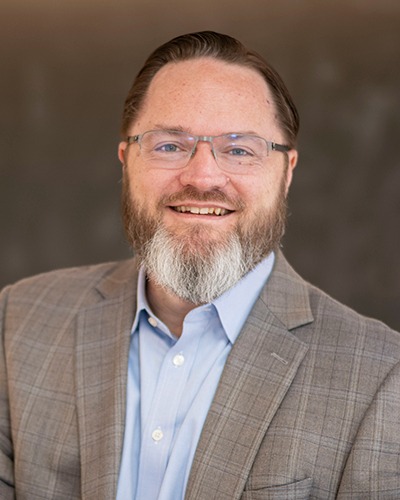
Research Computing Manager Jason Simms, Swarthmore College
Swarthmore College, a liberal arts college of about 1,700 students just west of Philadelphia, and Lafayette College, a STEM-strong liberal arts college of about 2,700 students in Easton, Pennsylvania, share something unusual: a single high-performance computing (HPC) cluster, Firebird. We spoke with Jason Simms, research computing manager at Swarthmore College, and his colleagues Andrew Reuther and Jason Alley to learn how the two institutions came to merge their research computing environments and what makes that partnership work.
*For current specifications, learn more here.
The following Q&A has been edited for brevity and clarity.
What prompted Lafayette to build a research computing program?
Simms: When I started at Lafayette College in 2016, they were doing a soft rebranding as a STEM-focused liberal arts college. They’ve always been a liberal arts college, and they’ve always been strong in STEM. But they quickly realized that if they’re going to make that claim, they need to have a technical environment that matches it. They needed to have, for instance, a research computing ecosystem, because if you’re going to say that you’re a STEM institution, you want to attract faculty who are very research active.
This was coupled with the fact that they were starting to see faculty applicants go very deep down the hiring process, to the point of talking about startup funds or research support. Lafayette quickly realized that they needed to enhance their infrastructure to ensure they remained able to meet the competitive research and teaching requirements of candidates.
Alley: Firebird’s value is obvious when researchers tackle work in a timeframe impossible on a workstation. But an unsung benefit, especially with dedicated support staff, is helping our small liberal arts colleges attract faculty who might otherwise choose larger research universities. It’s a quiet advantage we’ve confirmed simply by talking to them.
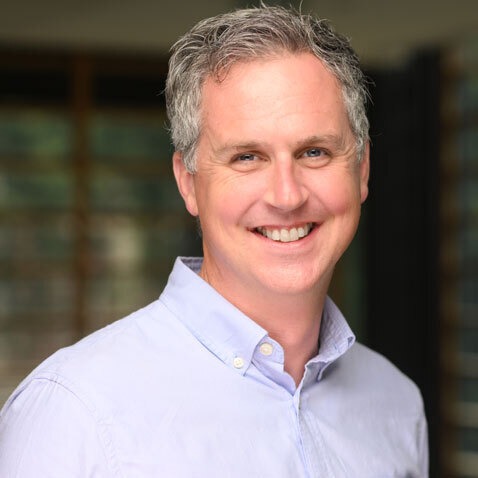
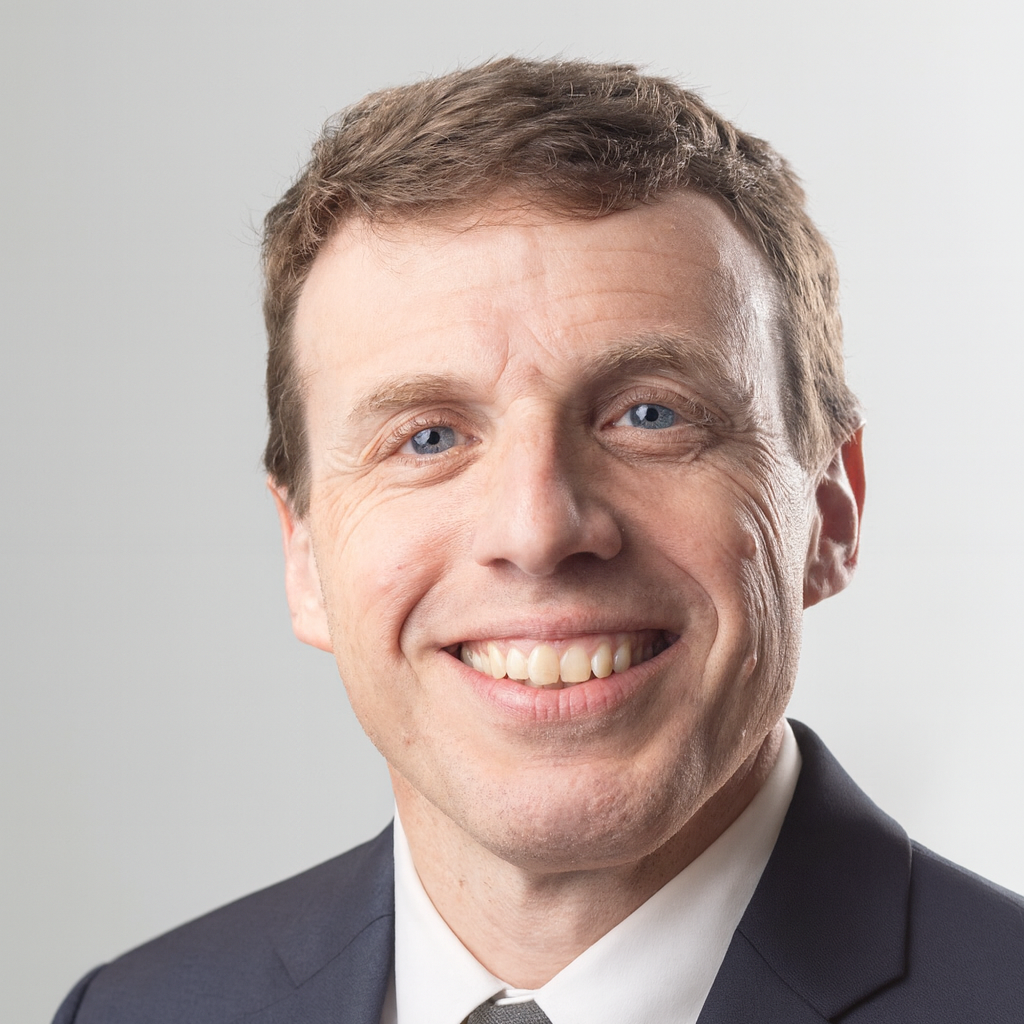
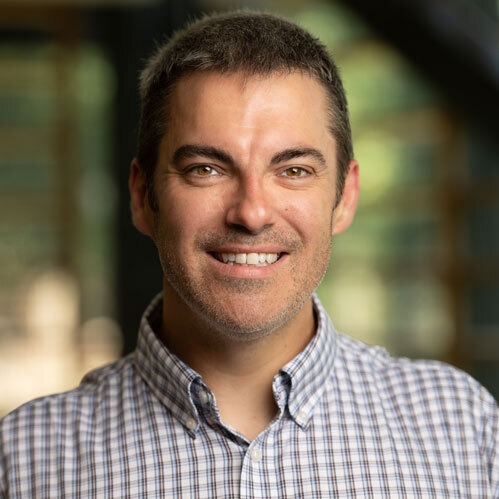
The team, from left: Jason Alley, director of learning and research technologies, Lafayette College; Andrew Ruether, senior director of academic technology, Swarthmore College; and Peter Goode, research computing systems administrator, Lafayette College.
How did you figure out what to build?
Simms: I was asked in early 2017 to start evaluating what it would take. I had been hired as an instructional technologist, and I had never done this role before, so I didn’t necessarily know how you go about gathering requirements for that kind of environment. I turned to some of the nascent communities that were out there, including CaRCC, Henry Neeman’s Virtual Residency program, ACI-REF (Advanced CyberInfrastructure Research and Education Facilitators), and the Campus Champions program. Those communities were so kind to provide examples of what they had done, or templates. From all of that, I put together a draft questionnaire that was ultimately sent out to all of campus.
It literally took years. It started in earnest in early 2017, and it wasn’t until early 2019, so it was two full years before they gave the green light. In summer of 2019, we finally got the cluster up and running.
How did Swarthmore join in?
Simms: Lafayette and Swarthmore have always had a close working relationship. We’re very similar institutions. Swarthmore ended up getting its own cluster about a year behind Lafayette, funded very differently. A faculty member in astrophysics applied for a private grant to buy a small cluster, and the researcher agreed that we could make it available to the campus. I was hired at Swarthmore in 2023 to do very much the same kind of role I was doing at Lafayette. About a year later, we decided to combine our clusters.
They are combined into one cluster called Firebird. It’s a single pool that’s available to researchers and students from either institution. One of the decisions we made very early on was that we wanted any user from either institution to feel like a first-class citizen on the resource. We manage the look and feel, the user requests, and the documentation separately. We ultimately decided to host it all at Lafayette. If we had continued hosting it at the data center in Philly, which is local to no one, we would have had to make special, dedicated trips.
Who is on the team?
Simms: Being at a small institution, it is quite small in many ways, at least in the people who allocate a full FTE (full-time equivalent) to it. I’m the only one at Swarthmore who has a full FTE dedicated to research computing. Lafayette’s research computing systems administrator, Peter Goode, serves as the systems administrator for Firebird, and I continue to perform research facilitation for Lafayette. So there are essentially two full-time FTEs devoted to research computing between Lafayette and Swarthmore.
Tell us about the cluster.
Simms: The Firebird cluster supports high-performance computing for tasks that need a large amount of computing power. It launched in June 2024 with:
- 20 compute nodes
- 5 high-memory nodes
- 2 high-CPU nodes
- 4 GPU nodes
- 2 storage nodes
Together, these provide:
- 1,724 cores
- 15 GPUs
- more than 1.2 petabytes of storage
In 2025, users from both colleges ran more than 459,000 jobs totaling over 10 million CPU hours, and the cluster grew with a new high-memory node, a compute node, and a GPU node.
Swarthmore and Lafayette are expanding support for high-throughput computing (HTC), which suits many independent tasks, such as a pattern-identification routine across 10,000 images. Firebird also contributed about 3 million CPU hours to public science through the OSPool, which lets researchers run independent jobs on thousands of systems across the United States.
What is high-throughput computing and why does it matter for clusters like Firebird?
Simms: HTC is a way of using computers to finish a very large amount of work by breaking it into many small, separate tasks that can run at the same time on several different machines. Unlike HPC, where one larger problem may need many processors working closely together, HTC tasks don’t need to “talk” to each other. Each one can run on its own, wherever there’s a free computer. The goal isn’t to make any single task faster but to complete as many tasks as possible over hours, days, or weeks. For example, an astronomer with 100,000 telescope images could process each image as its own job, spread across hundreds of computers at once. A biologist could also test how thousands of different drug molecules fit onto a protein, checking each molecule separately, so results come back in days instead of months. Typically, users don’t run large-scale HTC projects on a single cluster such as Firebird. We are lucky that Firebird, however, has sufficient resources to run smaller HTC jobs locally, and it’s also possible for users to run such jobs to learn that approach.
Does being a small team help or hurt?
Simms: There is a double edge to that sword. We aim to provide very bespoke service to our users. The downside is that every project becomes a one-off. It becomes something that is not duplicated by another researcher on campus, and that makes it hard to benefit from economies of scale. A lot of the solutions that we develop for one faculty member may only really ever apply to that one faculty member. And we focus on hiring unique people who don’t have a lot of overlap with other faculty. That’s the value of a liberal arts school: when you have a small enough faculty, you do your best to maximize difference.
Can you share an example of a customized project?
Simms: On the Swarthmore side, there is a biologist researcher who would spend all summer working in the Virginia woods, taking videos and measurements and other data related to beetles. He would amass a huge amount of data that he literally had to bring back on hard drives, like in shoeboxes, and drive them up to Swarthmore. So we worked with him to set up a data management pipeline, using Globus and Firebird, so that he could transfer it from the field to Firebird and not have to worry about lugging around hard drives anymore. All of his collaborators are on Firebird, working with the data in a single central location, which gets them to science much faster.
Vince Formica, professor and chair of the biology department at Swarthmore College, is the researcher Simms describes. Vince shared with us a little about his experience in working with the team.
Formica: Firebird and Jason’s (Simms’) help have revolutionized how I do research. I need to process huge amounts of video data, and having the power of an HPC right at my fingertips has allowed me to ask questions I never knew possible. Jason helped with lowering the learning curve in order to use an HPC. We’ve since moved all of our big computing tasks to Firebird because it is so accessible, stable, and high powered.
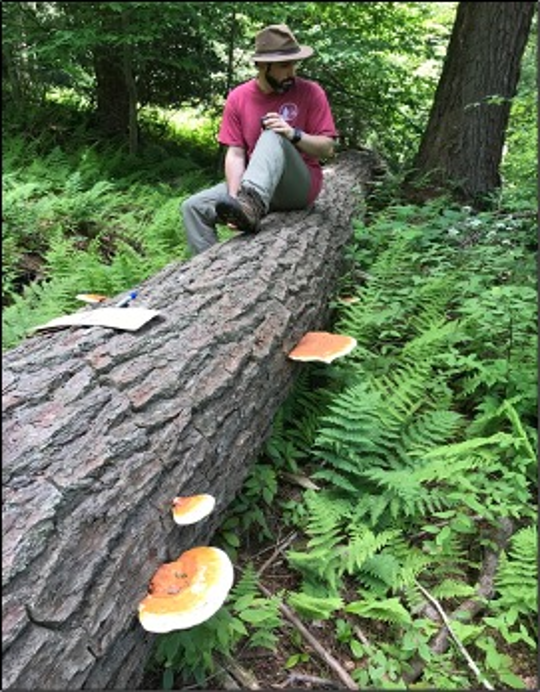
Principal Investigator Vince Formica, PhD and Firebird-cluster user observing social interactions of fungus beetles in their natural habitat. Photo courtesy of Vince Formica.
What worries you most about the next few years?
Simms: We are at a critical inflection point in the research computing world. The explosion of AI in the last couple of years has resulted in an extreme inability to source new equipment, because everything’s being sold to the hyperscalers. Institutions of all scales, even all the way up to R1s, are having a very challenging time buying anything. We used to pay $10,000 to $12,000 for a single compute node back around 2019. They got to a steady state around $15,000 to $18,000, and then, very recently, for exactly the same specs, it’s now $50,000. You used to be able to buy three or four nodes for the cost of one. That is unsustainable.
So the existential challenge right now is that whatever we have is what we have, and we need to find a way to extend its lifespan until maybe some sanity returns to pricing and availability. In the meantime, we have to find other services to augment what we have: national resources, the commercial cloud sometimes, and collaborating with other institutions, either locally, as we have with Lafayette, or regionally.
Goode: From the perspective of on-site cluster administration capital investment plans for hardware renewal and replacement have been realigned toward the priority of maintaining existing resources. The trickle of new hardware being integrated into the cluster, typical of prior years, has slowed significantly, both from faculty investments and from directly-funded purchases through annual capital requests. The team’s broader goal has thus pivoted to keeping Firebird’s wheels turning and ensuring that services remain as robust as possible for researchers of both schools.
What makes the Lafayette–Swarthmore partnership work?
Simms: People want to emulate it, and I think the partnership works because of the human element. We all knew each other before we went down that road. I’m a known quantity on both campuses. My supervisor, Andrew Ruether, knows Jason Alley, who’s his equivalent over at Lafayette. The CIOs (chief information officers) knew each other. There was a lot of goodwill and understanding and trust before we went down that road.
We talked to the provost; we talked to legal counsel. We have an MOU (memoranda of understanding) and plans for what happens if one institution wants to pull stuff out. If you have two institutions partnered where there isn’t that kind of prior-working relationship, I imagine it would be much harder to execute, because then you have to somehow build that trust. I think that trust is a significant point of success for us.
Ruether: Swarthmore and Lafayette ITS groups have a long history of collaboration. By sharing research computing staff, computing resources, data center space, and expertise, we are able to maximize our impact across both campuses. Ultimately, it’s the people who make this partnership so successful; we work closely together, and it doesn’t feel like work.
–
As Firebird continues to grow, the partnership stands as a model for how smaller institutions can pool resources to build something larger than the sum of its parts.
The 2027 Research Computing for Smaller Institutions (RCSI) conference will be held June 1-2, at Swarthmore College. Learn more at https://rcsi.swarthmore.edu/.