
As CaRCC marks its 10th anniversary, we sat down with Lauren Michael, one of its founding figures and now associate director for research engagement at Internet2, to look back at how a small NSF-funded pilot grew into the professional home for research computing and data (RCD) practitioners it is today.
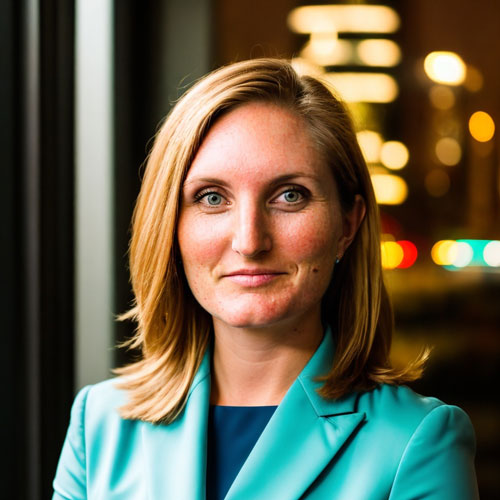
Lauren Michael, Associate Director for Research Engagement, Internet2
Q: Can you tell us about your early involvement with CaRCC, and how you came into this field?
Lauren: I came into the research computing and data profession at the University of Wisconsin–Madison straight out of grad school. I knew I liked computing, and enabling others, and teaching and communication, more than I wanted to continue on a traditional PhD career path. Almost right away, as I started my job there as the university’s first research computing “facilitator,” I got looped into our participation in the ACI-REF program (U.S. National Science Foundation-sponsored Award #1341935) – a program that funded facilitators at each of these six institutions, and was a precursor to CaRCC. The program forged a national alliance of educators to empower local campus researchers to be more effective users of advanced cyberinfrastructure (ACI). I was one of the first people, even in that group, whose job title actually had the word “facilitator” in it — hired with a full-time focus on doing facilitation, rather than also running systems or writing code, really just enabling researchers to make better use of large-scale computing and enhance their science.
With ACI-REF, I had a whole group of peers who were leaning into that same part of their jobs. Having that peer group was great — we could bounce ideas off of each other, compare approaches, and figure out what seemed to work best. We published Leading Practices of Facilitation, which informed my paper that’s often seen in the community as a kind of seminal guide. It was co-authored with Bruce Maas, UW-Madison’s then CIO, which was somewhat novel at the time — reflecting the idea that campus IT leadership really needed to be a genuine partner in supporting research computing, alongside research administration.
Q: How did the initial vision for CaRCC take shape, and what challenges were you and the founding team trying to solve?
Lauren: It was always the goal of the ACI-REF project to grow from a handful of campuses — we started with six — to a much larger set. As we built out the project and produced things like the Leading Practices of Facilitation online guide, we realized we already had a lot of community interest from people who wanted to be part of our conversations. We’d also come to recognize that we needed a bigger, national conversation about workforce development for research computing and data — one that recognized a full range of skills and backgrounds beyond facilitation, and gave people at a wider variety of campuses a way to learn from each other.
At first, we thought that scaling up would mean formal institutional commitments — each campus designating a campus RCD leader and obligating facilitator participation. But we realized the people actually doing the community-building and peer sharing needed to be the center of the model, not the institutions. That’s part of why, when we launched the CaRCC People Network in early 2018, we decided against a phased rollout with formal commitments, and just promoted it as widely as we could right away.
Q: How did the CaRCC name come about, and how did the organization grow from that first researcher-facing track?
Lauren: The “CaRCC” moniker actually came after we wrote the proposal for the Research Coordination Network grant that funded the next phase of this work — the proposal went in during the fall of 2015, and we were awarded in 2016. It started as just “CaRC,” for Campus Research Computing [Consortium], before evolving into the name we use today. We spent 2017 building out the format for peer experience-sharing among the ACI-REF campuses, and by the end of that year we were ready to plan a broader launch, which happened in early 2018. The central basis of that format lives on today via CaRCCs Tracks, groups, and processes. The systems-facing track came somewhat later, after a lot of conversation among research computing leads about what a sustainable structure would look like.
Q: How has CaRCC influenced the way universities define and hire for research computing and data roles?
Lauren: One of the fair criticisms of the early leading practices work was that it mostly reflected the perspective of large R1 universities — there needed to be more community input into what the standards for the field should look like, including things like job descriptions. That grew into a CaRCC Working Group — the Professionalization Working Group — which developed an HR framework in partnership with HR professionals and research computing leaders who gathered input from an even wider swath of the community. That gave the CaRCC HR Framework legitimacy and staying power.
Adoption has been gradual but is now significant, and it’s given people real leverage. At my own institution, when HR started a restructuring process years after the framework existed, I was able to point to it — to the credentials of the people who built it — and that helped them take it seriously. It also opened doors for research computing staff to be part of conversations defining newer roles like data scientists and data engineers, making sure those and other RCD-relevant roles are described in relation to traditional IT titles, rather than treated as a separate world.
Q: What do you envision for CaRCC going forward?
Lauren: At this point, CaRCC is most significantly a platform for year-round community engagement, with structure and processes that make it easy for the conversations and priorities to evolve. We’ve had new interest groups and working groups emerge over time, on top of that first researcher-facing track and the professionalization work. What we’ve built is really a scaffold that lets the community decide its own priorities — what it wants to produce, what it wants to talk about — rather than having some select group decide how things should be.
There are also easy on-ramps for people to get more involved, gradually, whether that’s just showing up occasionally or stepping into a coordinating role. For someone who’s the only facilitator on their campus, CaRCC is often the closest thing they have to an apprenticeship — a year-round way to learn from others and reflect on what’s working.
That same philosophy now shapes Lauren’s broader career at Internet2, where she has extended this community-enabling work to Internet2 strategic consulting for campuses and regional collaborations, and, most recently, the National AI Research Resource (NAIRR) Pilot, co-leading an NSF-supported effort to broaden participation via the RCD professional community. Across nearly a decade of federal grants and campus consulting, the throughline has stayed the same: building the human infrastructure — and the profession — that research computing depends on.
Ten years in, that peer-driven model remains CaRCC’s defining strength — a community-built profession, still being written by the people who practice it.