
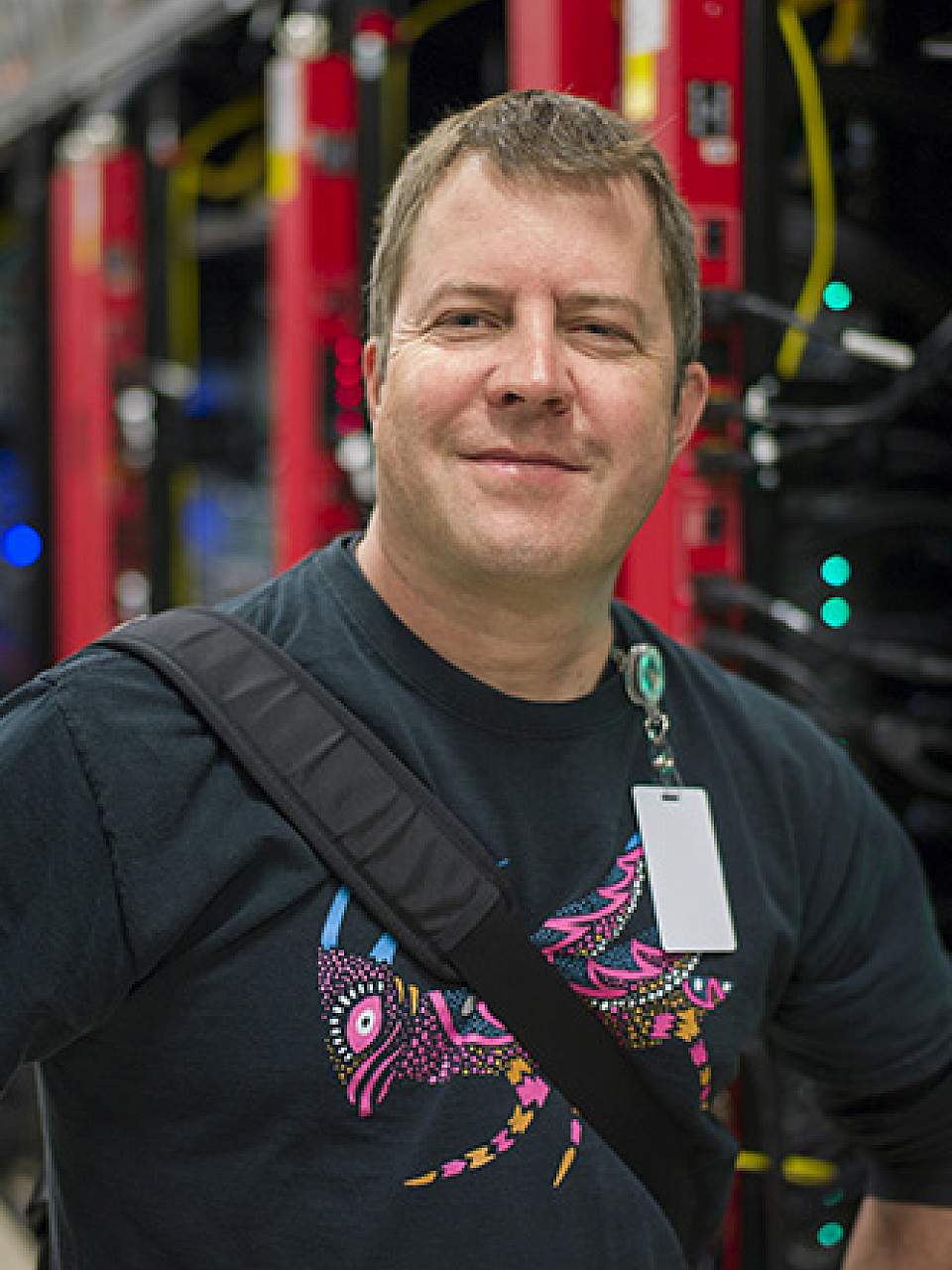
Thomas Cheatham, CaRCC’s Former Longtime Chair
As CaRCC celebrates its tenth anniversary, we sat down with Thomas Cheatham — director of the Center for High Performance Computing at the University of Utah from 2014–2026, professor of medicinal chemistry, and longtime chair of CaRCC — to look back at the organization’s founding and how it has grown.
How did you first get involved with what would become CaRCC?
It all traces back to Jim Bottum’s leadership and his belief that Research Computing & Data (RCD) professionals would be essential to the future of research. I first crossed paths with Jim at CASC (Coalition for Academic Scientific Computation) meetings, and those connections eventually led me into the Advanced Cyberinfrastructure Research and Educator Facilitators or ACI-REF program (U.S. National Science Foundation-sponsored Award #1341935).
What was your path from ACI-REF to helping found CaRCC?
I took on a bigger role in the project when Utah’s original principal investigator (PI) moved into the role of interim CIO, and I stepped in as PI — eventually going on to chair ACI-REF outright. When an attempt to grow the project from about six universities to twenty or more institutions didn’t get funded by the U.S. National Science Foundation (NSF), a small group of colleagues decided to work together to build something ourselves. That became CaRCC, the Campus Research Computing Consortium. The CaRCC team has spent over a decade since then helping it grow into what it is today.
Did the organization look the same in its early days as it does now?
Not at all. It started out organized around institutional representation, but we quickly realized that lens was too narrow. The people doing the real work of research computing and data were often not directors or official reps — they were the ones actually in the trenches. So we opened our doors: anyone in the RCD space could join, no matter their title or their spot on an org chart. That openness has become a hallmark of CaRCC’s success. It’s also where the idea of the CaRCC “facings” came from — recognizing that someone might be researcher-facing, systems-facing, or both, and giving each of those groups a monthly space to talk through what they’re dealing with and offer guidance.
What was the response to CaRCC in the early days?
There was some initial skepticism from other groups doing similar work who saw CaRCC as possibly overlapping with them. What turned that around was choosing to collaborate instead of compete — giving credit where it was due, working to fill unmet needs rather than reinventing the wheel, staying transparent, and building things together with the existing organizations in the community. A good example is the Capabilities Model, developed with Internet2 and EDUCAUSE with support from the NSF, which let RCD teams take an honest look at where they stood without feeling judged for it. That mindset is a big part of why CaRCC has grown into a community of around twenty-two hundred people, run not by any one leader but by rotating volunteers who make decisions together and agree to disagree gracefully when they need to.
What’s next for CaRCC?
Since we’re still entirely volunteer-powered, we’re working toward becoming a formal nonprofit organization to support long-term sustainability. I’m optimistic about where the field is headed, especially as research leans more and more on serious computing power and data in the age of AI.
Any final thoughts as CaRCC marks ten years?
We’re proud of what CaRCC has built and where it’s headed, and we’d love to see more involvement — as a way of showing just how open this growing community really is.